
Maintenance · 2 min read
When and How to Plant Tulip and Daffodil Bulbs
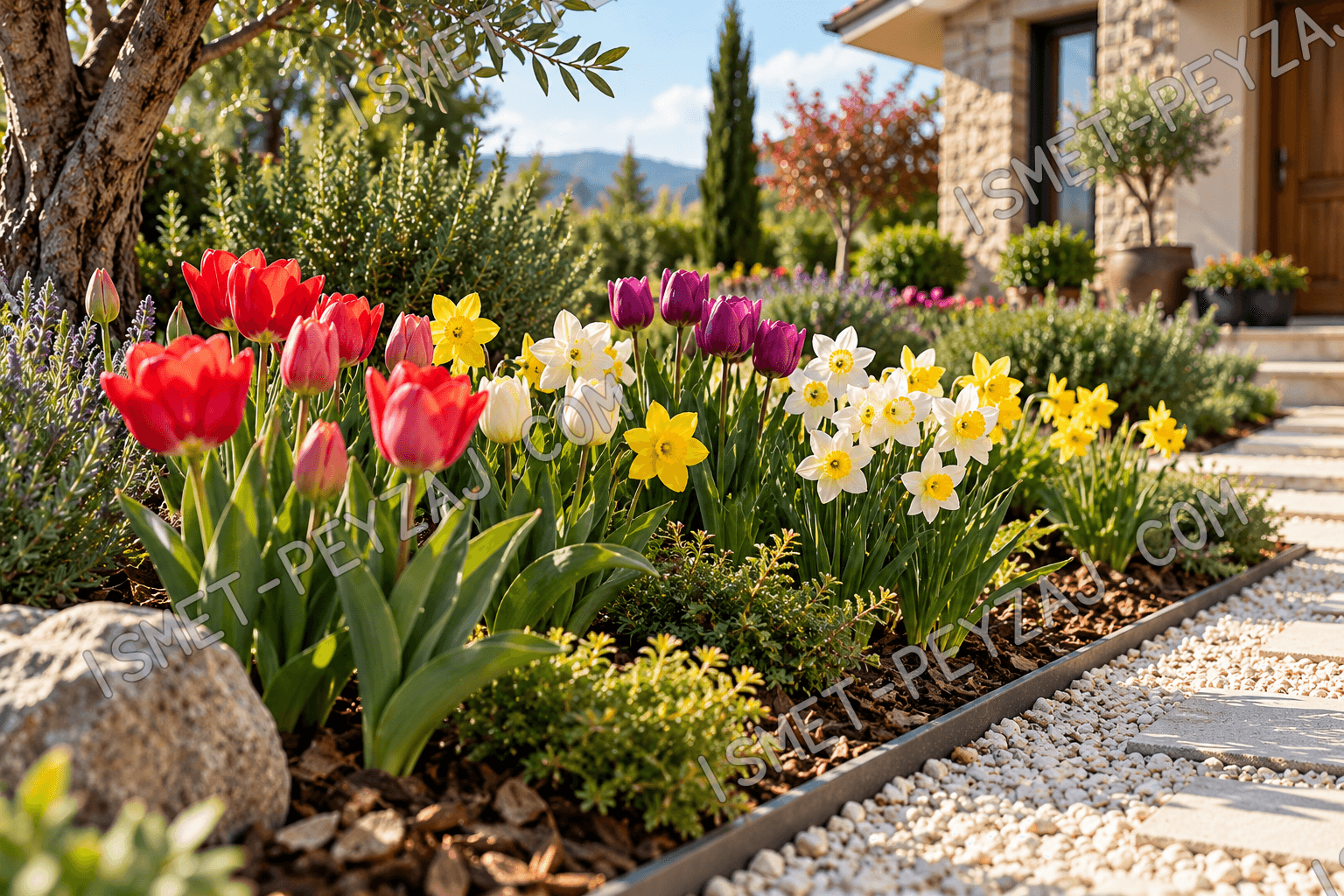
Bulbs you bury in autumn greet you with flowers in spring. A short guide to planting time, depth, spacing and care after flowering.
October 12, 2026
Water that stays for hours after the rain kills lawns and plants. How do you recognise a drainage problem, and how do you solve it with the ground, the slope and the choice of plants?
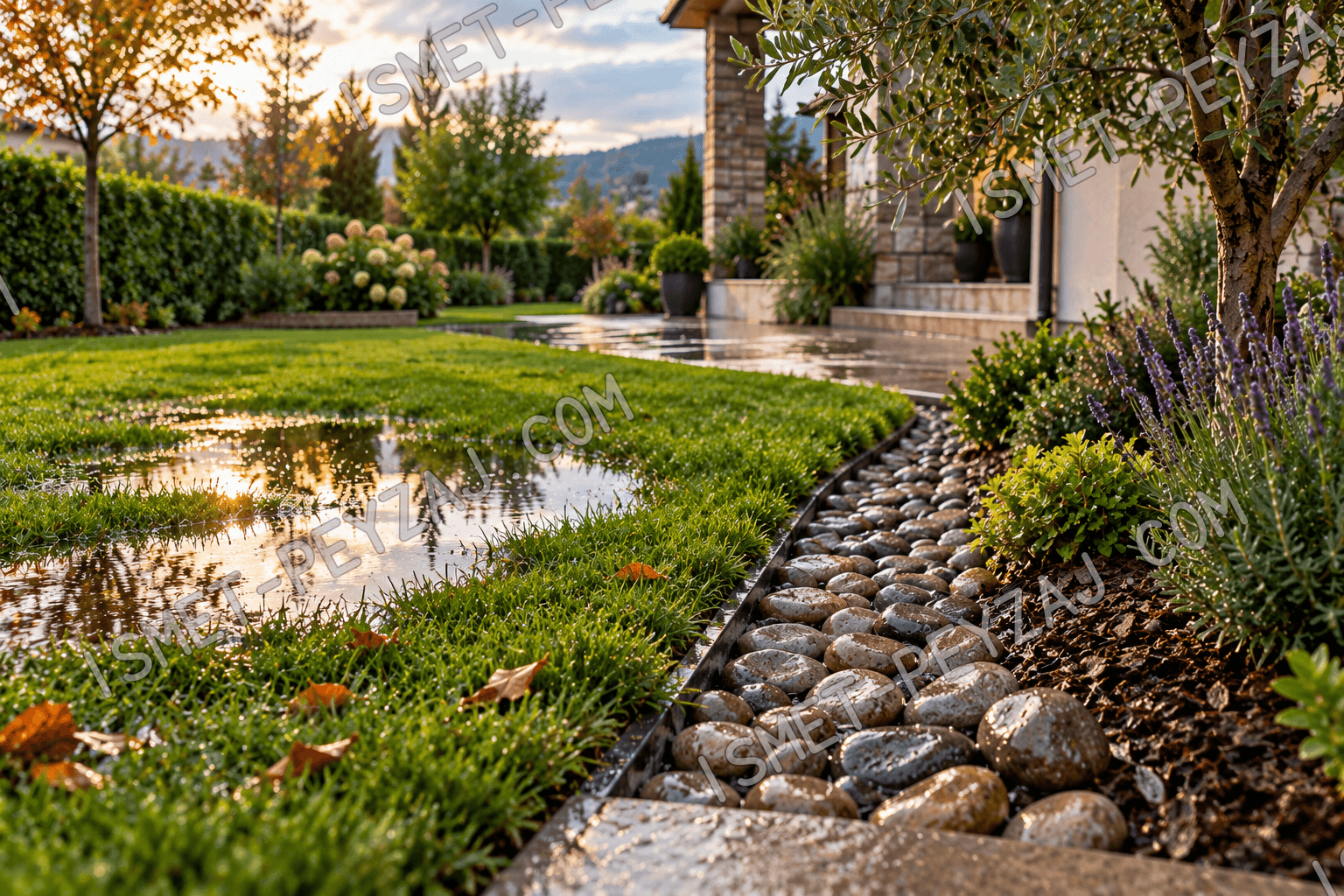
If puddles remain in your garden after the rain stops, the problem is probably drainage. In rainy regions like Kocaeli, this is one of the most common reasons lawns and plants die. When roots stay in water they run out of oxygen and rot.
Do a simple test. Dig a hole about 30 cm deep at the suspect spot in the garden, fill it with water and wait for it to drain. As a general rule, the water should drain within a few hours. If it is still standing in the hole after a day, the ground is not letting water through well enough.
The surface should slope slightly so that water runs away from the house and the planted area. Levelling is often the cheapest fix.
Digging compacted soil deeply and mixing in perlite, coarse sand and organic matter improves aeration. To renew the top layer you can use sieved garden soil.
To collect water and carry it away, dig a sloping trench, lay geotextile in it and fill it with coarse stone. If the top is covered with river stone, it does its job and also looks decorative. Lay geotextile underneath so the stone does not mix into the soil.
If the ground cannot be fixed, plant in raised beds. The roots stay dry.
Where water stays for a long time, choose plants that tolerate wet soil better instead of plants like lavender and rosemary, whose roots rot quickly.
If the water runs toward the building, or the ground holds water over a very large area, do not apply a solution without taking measurements. Request a free site visit and let us see your garden on site.
Bulbs you bury in autumn greet you with flowers in spring. A short guide to planting time, depth, spacing and care after flowering.